Guides, glossary, and supplementary reading
Supporting material to complement the workshop. Each resource is written in plain language and designed to be useful on its own, not just as a companion to the lessons.
Before you open the first lesson
How to Gather Your Financial Information
Before the workshop begins in earnest, you need to collect some basic information about your household finances. This guide explains exactly what to gather, where to find it, and how to organise it so you are ready to start the first exercise without delay. It covers bank statements, utility bills, payslips, and any other documents that will be useful during the mapping exercises in Module 1.
Choosing Between Digital and Paper Templates
All workshop templates are available in both spreadsheet format and printable PDF. This guide explains the practical differences between the two formats and helps you decide which is likely to work better for your situation. There is no single correct answer, and the guide does not push you toward one format over the other.
Budgeting Terms Explained in Plain Language
A reference glossary covering every financial term used in the workshop. Written for people with no finance background, the glossary avoids circular definitions and explains each term using everyday language and a practical household example. Terms covered include: fixed cost, variable cost, net income, gross income, discretionary spending, irregular expense, and monthly provision. The glossary is intended as a reference to consult during the workshop rather than as reading material to complete before starting.
Context and background for the curious
Why Household Budgeting Is Different from Business Accounting
A short explanatory piece on why the frameworks used in business finance do not translate directly to household use, and what that means for how you should approach your own budget.
The Psychology of Spending: What Research Suggests
An overview of what behavioural research suggests about how people make spending decisions, and how awareness of these patterns can help when setting up a budget.
Common Reasons Household Budgets Stop Working
An honest look at the most frequent reasons people abandon budgeting systems, and how the workshop structure addresses each of them directly.
How to Talk About Money with a Partner or Housemate
Practical guidance on approaching shared household budgeting conversations, including how to set up a joint budget using the workshop templates when two people are managing finances together.
Eight templates, one complete system
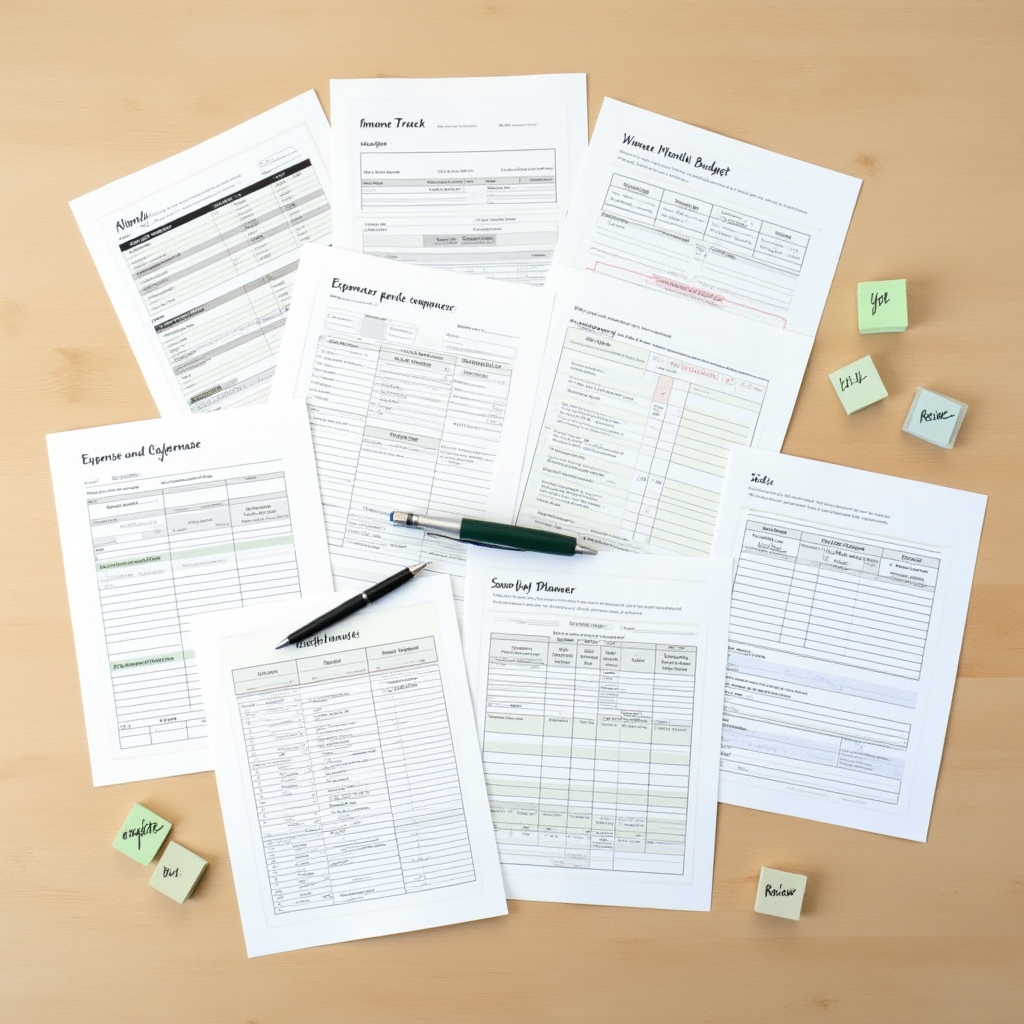
The workshop includes a set of eight coordinated templates, each serving a specific function within the overall budgeting system. They are designed to work together as a set, with data flowing logically from one template to the next. The income and expense mapping sheet feeds into the categorisation worksheet, which feeds into the main monthly budget, which connects to the comparison sheet and the savings planner.
All templates are available immediately upon enrolling in the workshop. They can be used digitally in any standard spreadsheet application, or printed and completed by hand. The logic and structure are identical in both formats.
Enquire About Access